

ESSENTIAL
BeSmart – Understanding and Setting Therapeutic Goals Correctly
Have you ever heard of "smart spacing"?
Probably so, since everyone’s talking about it. But what exactly does it mean, and how can it be applied in a rehabilitation setting? And how can we ensure that we’re working with our patients toward goals that are as relevant as possible?
In this course, we’d like to explore how goal-setting works according to best practices and how you can apply it in your day-to-day therapy practice. Step by step, we’ll go over the most important points you need to keep in mind when setting goals. It doesn’t matter whether you work in a private practice, a clinic, or another setting.
Course Content
- Introduction to the Topic
- The ICF levels, particularly environmental factors and personal factors
- Involvement of Family Members, Resources, and Barriers
- Bottom-Up and Top-Down
- Distinguishing Between Performance and Capacity
- Self-employed—what does that mean for the goal?
- SMART
- Final Test
Therapists from all fields
Nurses
Doctors
Special Education Teachers
Kinesiologists*
60 minutes of study time
including handout
Available for 6 months from the date of booking
Meet the Teacher

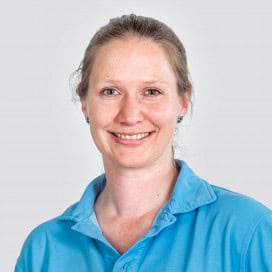
Franziska Spreitler, MSc PT
Franziska is the Director of Therapies and a member of the clinic’s management team at Kinder-Reha Schweiz at the University Children’s Hospital of Zurich. She earned a Master of Science in Neurorehabilitation Research from Danube University in Krems and holds a Certificate of Advanced Studies (CAS) in Leadership and Management as well as a CAS in Business Administration in Social and Health Care. For years, she has managed the goal-setting process in the context of rehabilitation within the clinic and has given numerous presentations on SMART goal setting.
Information Video: BeSmart – Understanding and Setting Therapeutic Goals Correctly
Continuing Education Credits
and
Certificate
For this course, you will receive the following continuing education credits
- German Association of Occupational Therapists (DVE): 1 point
- German Association of Physical Therapy (ZVK): 1 point
- Umbrella Organization for Medical-Technical Services (MTD): 1 class period*
- Ergoverband Schweiz (EVS): 1 point
- Physioswiss: 1 point
- Pediatrics Switzerland: 1 CME credit
Upon completion of the course, you will automatically receive a personalized certificate that serves as proof of your continuing education.
* Our certificate of participation can be submitted to your professional association as part of an application for the MTD-CPD certificate.