
EXPERT
Integration of Neurodynamics into Neurorehabilitation (INN®) Expert 2: Neurodynamic Tests
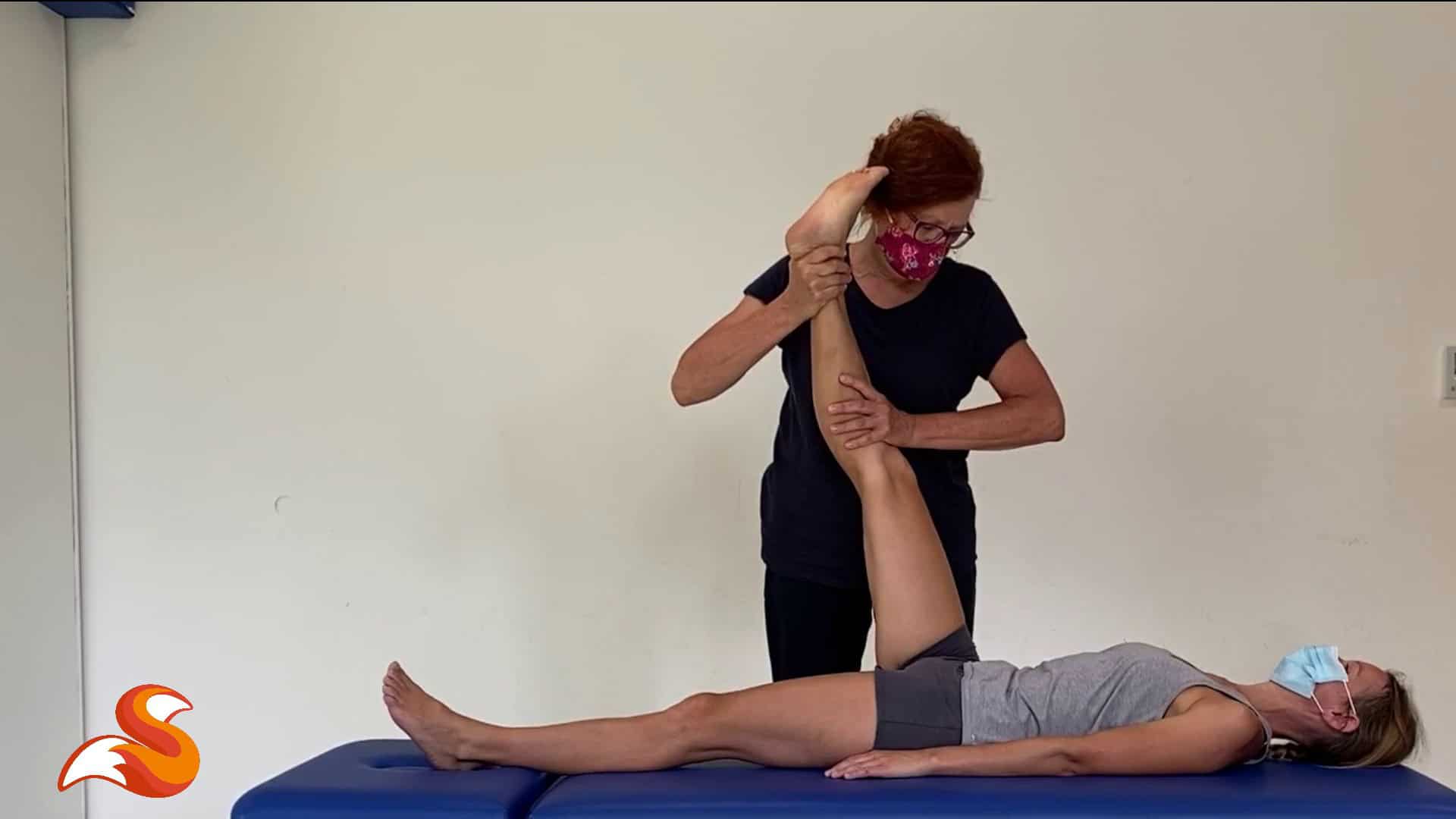
The INN® neurodynamic tests allow you to perform clinical nerve testing.
Where do the observed limitations come from? Neurodynamic tests provide you with the building blocks for your clinical reasoning!
Course Content
In this course, you’ll learn how to apply neurodynamic tests in a targeted and safe manner—with healthy individuals, with people who have neurological impairments, and as a foundation for movement analysis in everyday clinical practice. You’ll assume the various positions yourself and thereby experience how they affect you. Through hands-on practice with models, you’ll gain confidence in performing the tests, become familiar with the range of possible reactions, and be able to later apply the tests to individuals with neurological impairments and children. Another key focus is on the palpation of peripheral nerves to identify their course and detect potential sensitive areas. This provides important information for interpreting the test results.
Learning Objective:
Upon completion of this course, you will be able to apply neurodynamic tests specifically designed for neurorehabilitation and interpret the findings in a clinical context. You will understand the anatomical foundations, be familiar with the testing protocols, and be able to respond sensitively to the reactions of even the most severely affected patients or individuals who are unable to provide reliable verbal feedback.
Note
This is Part 2 of the INN® Basic Digital Course. It consists of four courses:
Expert 1: INN® Fundamentals, Development, and Application (4 hours)
Expert 2: INN® Neurodynamic Tests
Expert 3: INN® Additional Aspects
Expert 4: INN® Clinical Reasoning Process
Upon completion of all four courses, you will receive the certificate for the INN® Basic Course: Integration of Neurodynamics into Neurorehabilitation. This certificate qualifies you to participate in INN® hands-on courses.
Course Part 1 | Testing Basics
- Introduction and Objectives
- Requirement
- Test Rules for the Model
- Testing Guidelines for Neurological Patients
- Knowledge Check
Course Section 2 | Tests of the Lower Extremities and Trunk
- Straight Leg Raise (SLR): Anatomy and Technique Demonstrated on a Model
- Introduction to Motion Diagrams
- Straight Leg Raise (SLR) in Patients
- Variations of the Straight Leg Raise (SLR)
- Introduction: Palpation and Nerves of the Sacral Plexus
- Prone Knee Bend (PKB): Anatomy and Technique Using a Model
- Prone Knee Bend (PKB) in Patients
- Additional Variations of the Prone Knee Bend (PKB) and Palpation
- Slump and Passive Neck Flexion (PNF)
- Quality Criteria and Minimal Clinical Difference
- Knowledge Check
Course Section 3 | Upper Extremity Tests
- Brachial plexus
- ULNT 1: Anatomy and Testing on a Model
- ULNT 2b and 2b: Anatomy and Testing on a Model
- ULNT 3a and 3b: Anatomy and Model-Based Testing
- ULNT Adjustments for Patients and Variants
- Palpation and Nerves of the Brachial Plexus and Other Tests
- Quality criteria and minimum clinically significant difference
- Knowledge Check
Course Part 4 | Final Test
Therapists from all fields
Doctors
Special Education Teachers
Kinesiologists*
Anyone who works with people with brain injuries and would like to learn more about the relationship between structure, function, activity, and independence.
360 minutes of study time
including handout
Available for 6 months from the date of booking
Meet the Teachers

Nora Kern, MSc PT, OMPT
To determine which structure should be prioritized for treatment, we not only explain the tests but also discuss how to differentiate them from other structures and how to adapt them to the specific needs of individuals who have suffered a brain lesion and of children. In addition, I use these tests in conjunction with other specific tests to rule out structural problems—a prerequisite for training at the activity level. For those affected, the only thing that matters is whether their quality of life improves as a result of treatment: that is why follow-up assessments—especially at the participation level—are essential.

Dr. Petra Marsico, PT
Simply learning the neurodynamic tests has greatly enriched my way of thinking and my clinical reasoning regarding the movement patterns of children and adolescents, both with and without neurological diagnoses. Through the targeted use of these tests, I can treat children more precisely and work with them to develop the necessary range of motion (mobility) that promotes their independence and movement patterns.
Information Video: INN Expert 2—Neurodynamic Tests
Continuing Education Credits
and
Certificate
For this course, you will receive the following continuing education credits
- German Association of Occupational Therapists (DVE): 8 points
- German Association of Physical Therapy (ZVK): 8 points
- Umbrella Organization for Medical-Technical Services (MTD): 8 class periods*
- Ergoverband Schweiz (EVS): 6 points
- Physioswiss: 6 points
Upon completion of the course, you will automatically receive a personalized certificate that serves as proof of your continuing education.
* Our certificate of participation can be submitted to your professional association as part of an application for the MTD-CPD certificate.